

This story was published by The Mill: an award-winning email newsletter that sends you great stories, proper local journalism and peerless writing about life in Greater Manchester. 58,000 people have already joined our mailing list. Just hit that button below to join up for free.
It’s only when I get to 40 Heywood Street that I realise it no longer exists. Still reeling from the attack the day before, I walk a mile in the rain from Heaton Park Synagogue to Cheetham Hill, only to find the edge of a gated council park and a red-brick mini market. Entering the shop, I ask the man behind the till if he knows where 40 Heywood Street is, explaining that I’m looking for the house my grandmother grew up in, the house my Jewish family lived in for over 60 years. The owner of the shop, Mohammed Khan, steps out into the rain at once to help me find it.
On Thursday morning, a terrible tragedy occurred in Crumpsall. During a targeted attempt on Jewish people’s lives, two innocent men were killed, Adrian Daulby and Melvin Cravitz. Four more people were injured. The attacker, a 35-year-old man named Jihad Al-Shamie, was killed by armed police at the scene.
Crumpsall and the surrounding towns of North Manchester – Cheetham Hill, Harpurhey, Prestwich — have for decades been home to Jewish and Muslim Mancunians alike, but Thursday’s atrocity and the subsequent press coverage might suggest two communities at war. When I start chatting to Mohammed about my family history in the area, and his own experience living there, and the ways in which both Jewish and Muslim lives have been affected by the attack, I don’t find that this picture rings true.
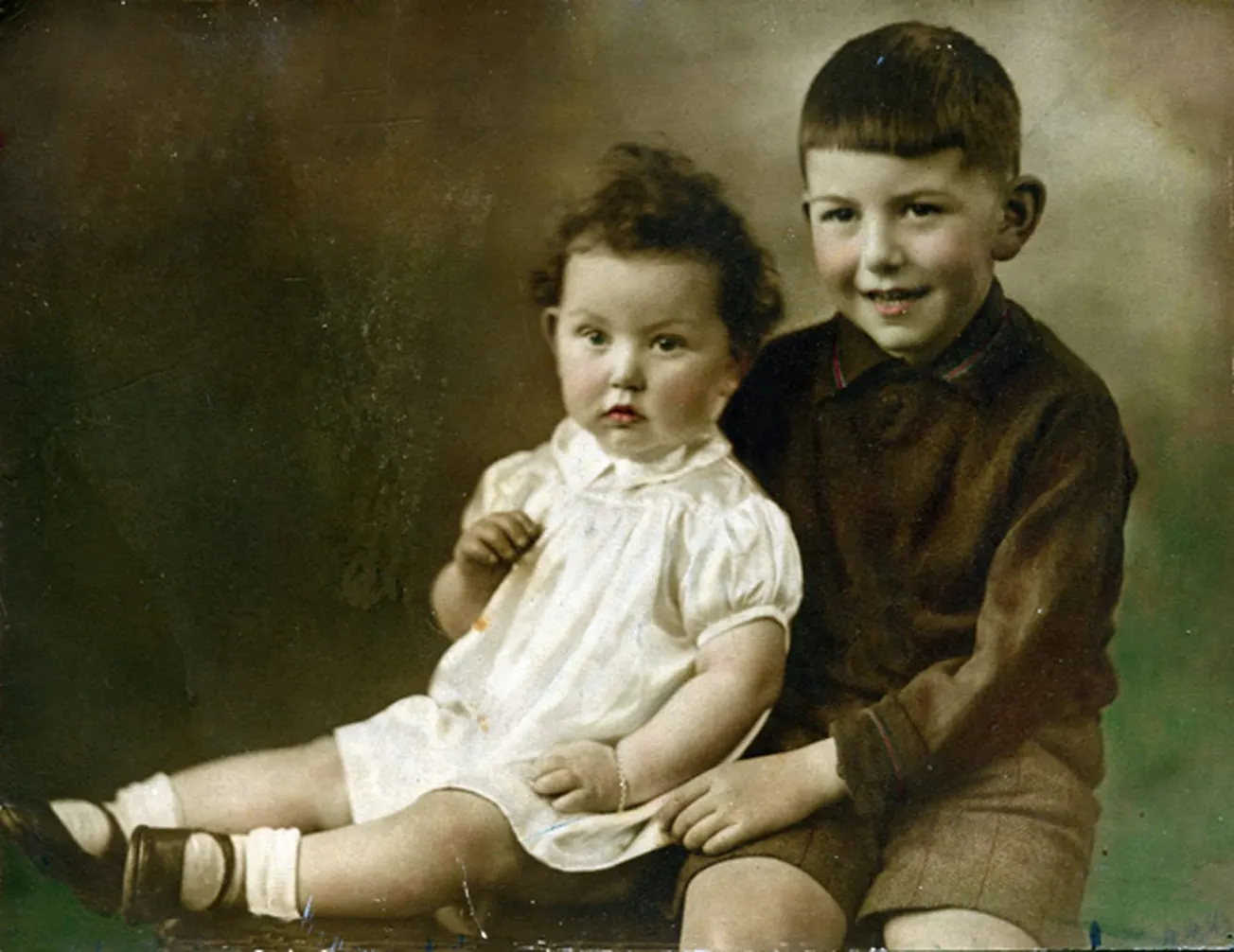
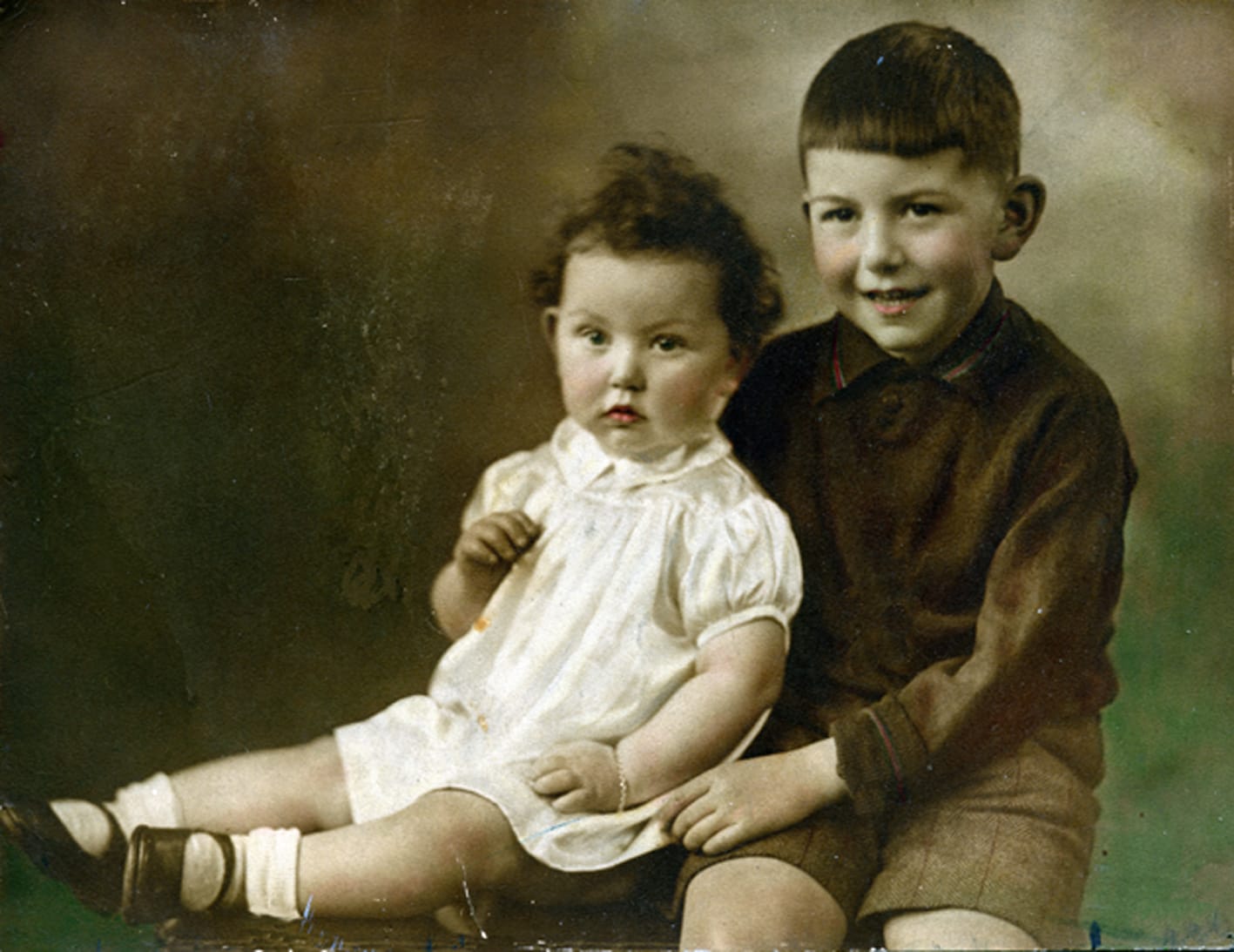
My gran, Ruth Morris, was born in Cheetham Hill in 1941. She’s delighted, in classic gran fashion, when I ring her up to chat about it. She remembers the Heywood Street property well — a three-bed, Victorian end terrace that once housed my great great grandparents and all nine of their children. There was an attic where the children slept, and a cellar where they kept their coal and Passover plates. Her grandparents were typical Jewish immigrants: they arrived in the UK in the 1880s penniless, fleeing pogroms in the Baltics; both of them, separately, changed their surnames to Morris at one point or another; and they were all trained as tailors. Ruth remembers the iron table her father cut cloth on, that doubled as an air raid shelter during the war.
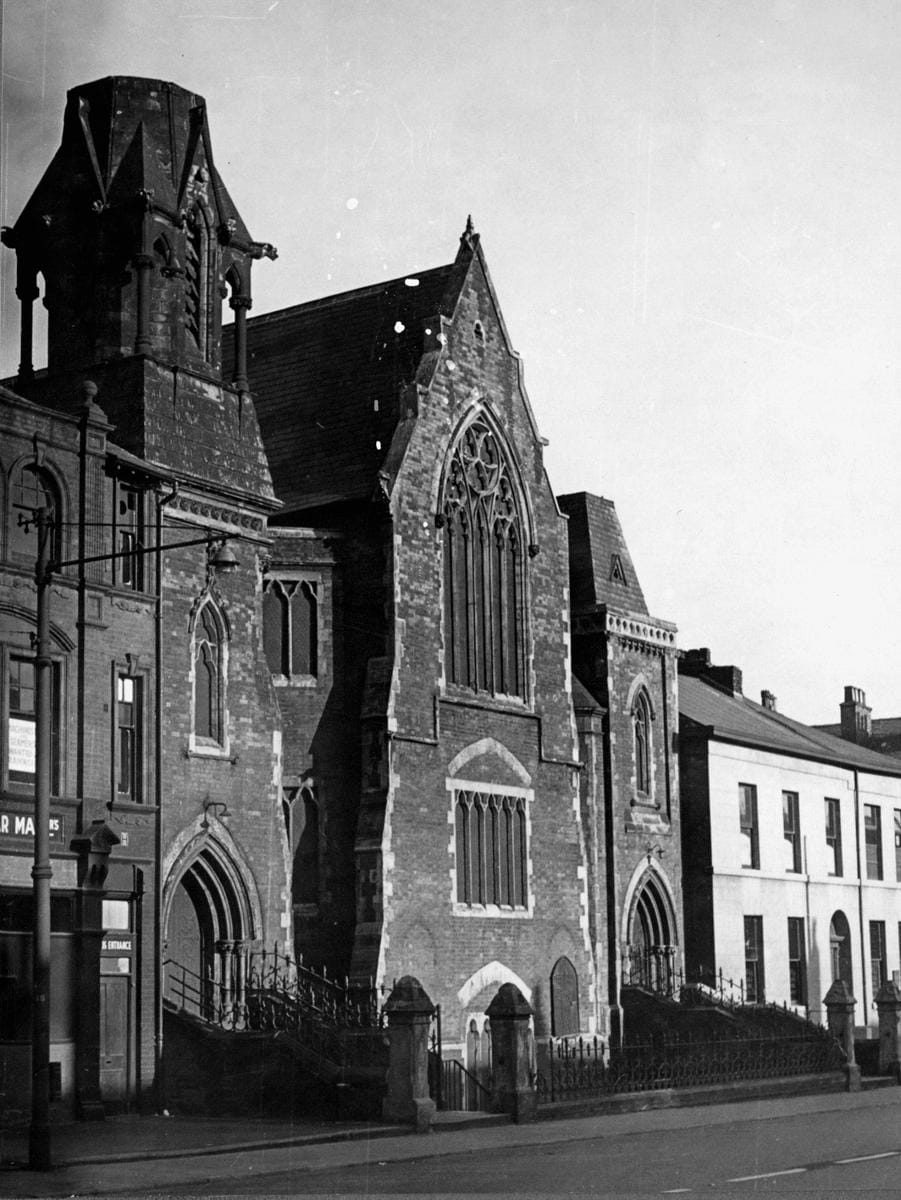
Back then, Cheetham Hill was “very, very Jewish”, she tells me. Almost every family on the street were Jews, and within spitting distance of the house you’d find a kosher butcher, kosher fishmonger, and Allweiss bagel shop that sold Challah on Shabbat. My great great grandfather helped build a synagogue called Beit Jacob, and they’d go there on high holidays to pray. For weddings – and there were lots of them, given all the children – they’d go to United Synagogue on Cheetham Hill Road: a large cathedral-like building that used to be a Methodist chapel.
Still, living in a Jewish area didn’t mean that Ruth felt any less Mancunian — on the contrary, it’s hard to get her to stop talking about it. “I just loved Manchester so much as a kid,” she tells me, unable to see me rolling my eyes over the phone. “My sister and I, we both thought we were the luckiest people in the world, to be born in Manchester of all places.”
From the age of eight, Ruth was obsessed with Manchester United — “I was just mad about them,” she says, still calling them the Busby Babes, and referring to them on more than one occasion as “the best football team in the world, ever.” She dropped out of night school (and consequently never passed her A Levels) so that she could watch them play European Cup games on Wednesday nights. When most of the team were killed in the Munich Air Disaster that same year, she was "devastated for life.”
As churches in Cheetham Hill were replaced with synagogues, so many of the synagogues were later replaced themselves. Nowadays, a few strides from 40 Heywood Street, there’s a Sikh gurdwara and a Muslim mosque.
‘We have to look after one another’
Mohammed Khan’s family are from Afghanistan. His father was injured fighting in the Soviet-Afghan war. After the ensuing civil war, the family moved to Pakistan, and in 2009, they came to Cheetham Hill, at which point his dad took on a job as a security guard at the Trafford Centre. In 2018, Mohammed’s brother bought the cornershop we’re standing in now — the Khan Brother’s Mini Market, bearing no resemblance whatsoever to my grandmother’s home.
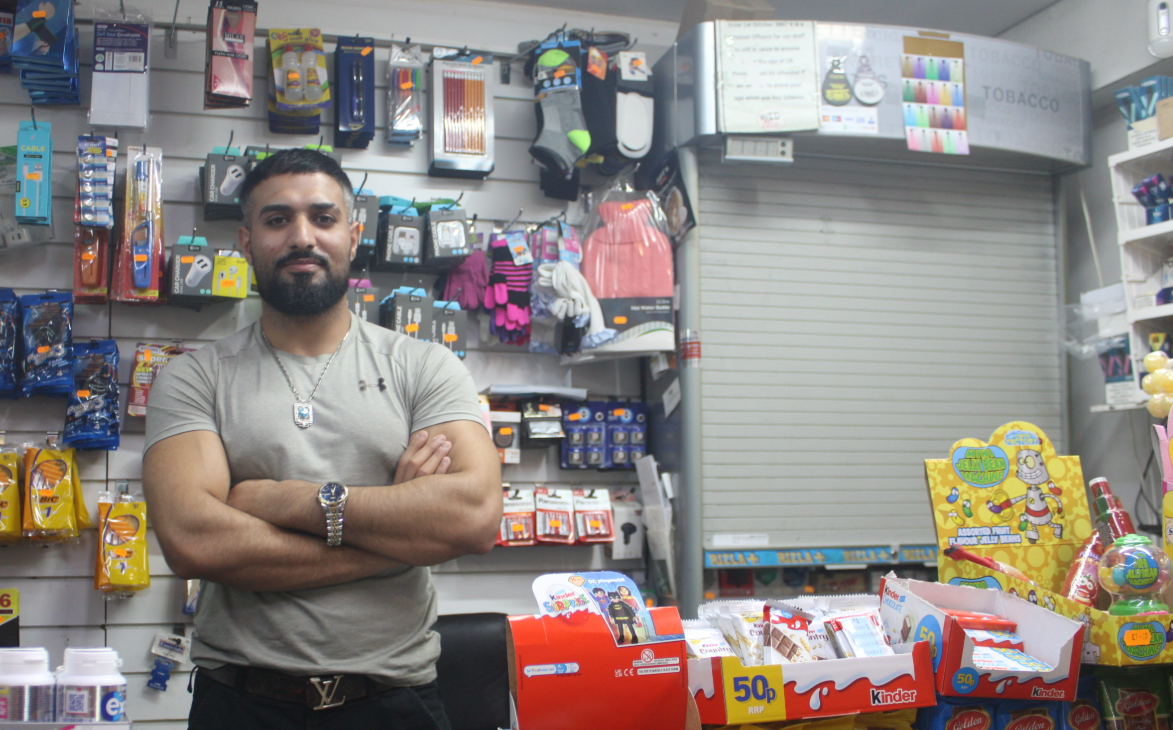
Mohammed enjoys living in Cheetham Hill and says he’s “never had any issues” with racism in the area — except, of course, for a number of incidents with teenagers telling him to go back to his own country, and calling him an unoriginal derivative of the word Pakistani — proof if proof were needed that racists lack creativity. It’s remarkably similar to what my gran tells me about growing up in the same spot 80 years previously. “I didn’t experience any antisemitism growing up,” she says — apart from local children who’d throw stones at her on the way to school and call her a “dirty Jew”.
Mohammed tells me that he gets on very well with the local Orthodox community, that he considers them his friends. The family doctor he’s had since he was a child is Jewish. He goes to the local Puregym, and he has Orthodox Jewish friends there, who he coaches on how to lift weights, and shows how to use his specialised equipment. “I’m looking forward to making more friends like that,” he says. “We have to look after one another.”
The nature of antisemitism in the UK has changed, but the problem has evidently not gone away. A recent report published by the Guardian claimed that 35% of Jews feel unsafe in Britain in 2025, compared with just 9% before the October 7 attacks, and the war in Gaza began. A Jewish woman at Friday’s vigil told the BBC that "[y]ou could feel the tension in the air building since October 2023” — and when I was in Crumpsall on Thursday, there was a feeling that the attack was a direct result of Jewish people’s concerns being ignored.
In the same BBC article, however, a local explains that there are people on his street of every nationality, and they all get on. “If something bad happens the community will turn out, it’s a great community round here.” The Jewish Telegraph editor Paul Harris told The Mill in late 2023 that there’s “a lot of fear in the Jewish community,” — but that some of it was created by false rumours. When his newspaper looked into various stories about Jews being thrown out of restaurants in Manchester, “every one we’ve checked up on has been spurious,” Harris said, adding: “There is no problem between the Jewish and Muslim communities here, as far as we have ascertained.”
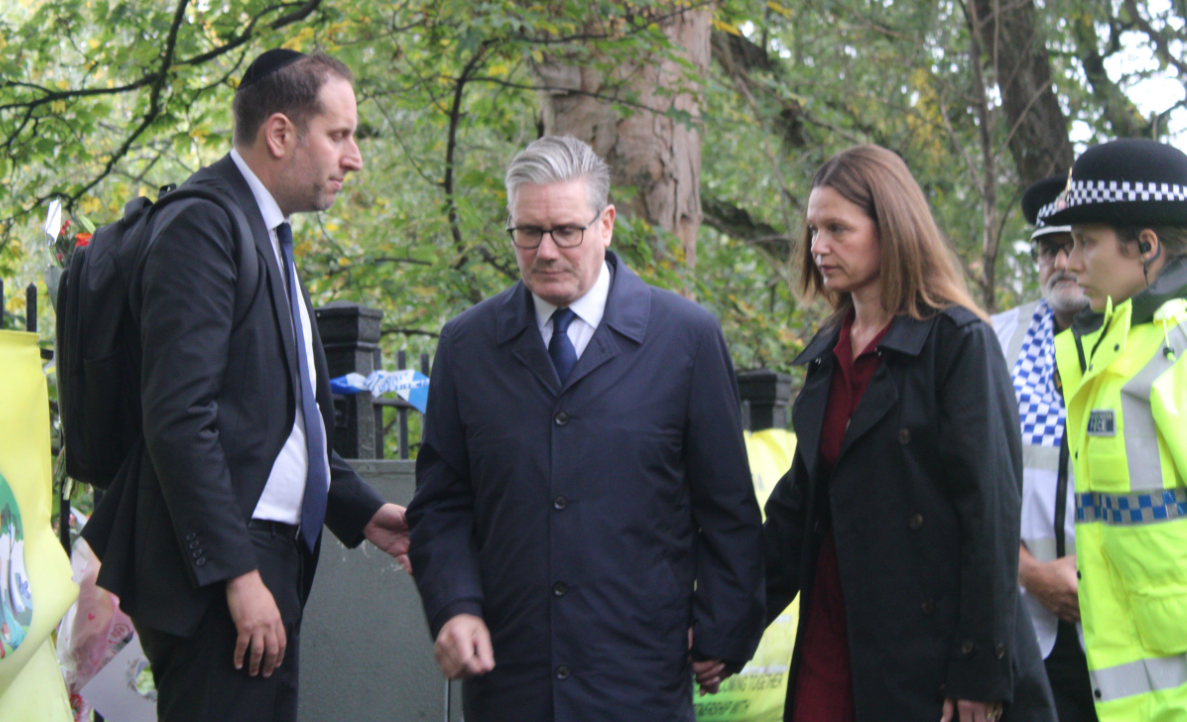
Mohammed tells me, too, that his reaction to last Thursday’s terror attack was one of fear. Once an attacker is identified as a Muslim, he says, many Muslims fear for their lives. Regrettably (though I don’t think visibly) my initial, impulsive reaction to this was indignation. In the hours immediately following the attack, I found myself praying with the local Orthodox community in an unguarded synagogue. Their only security was making me recite a Jewish prayer, they didn’t even have a lock on the door, and I was scared. It felt somehow bizarre to hear a Muslim man tell me that he was scared as a result of the same attack.
And yet, it’s known that incidents of anti-Muslim hatred spike massively after jihadi attacks. In the weeks following the Manchester Arena Bombing, Islamaphobic hate crimes in our city quadrupled, according to LSE analysis of data from GMP. Since Thursday, Mohammed tells me he’s been concerned about closing his shop late at night. “I can’t leave my brother to walk on his own from the Masjid to the house. We don’t want him to get attacked. We are scared for our future, we’re scared.”
He repeats over and over his disgust at the murder of Jews in his local community. “What he did was totally wrong. It is wrong, what he’s done. I’ve got my own family. I want them to feel safe going to a mosque, to celebrate Eid.” But it’s important for him to tell me time and again that Jihad Al-Shamia is just one individual, that he doesn’t represent a community, that he definitely doesn’t represent the Muslim community of North Manchester.
And Ruth says much the same. “What happened at that synagogue was a horrible thing, but the guy was a criminal anyway,” she says, referring to the fact that Al-Shamie was on bail after being arrested on suspicion of rape. She tells me that the situation is not unique, that people all over the world are angry at the number of senseless deaths committed in the name of religion, or politics. “My heart is with the people in that synagogue,” she says. “But it’s also with the 53 people that died, who weren’t militants, in Gaza on Thursday. That makes me angry as well.”
What’s important, to me at least, about what Ruth and Mohammed have to say, is that they’re not people I found at a protest, or a vigil. They’re not activists who have been vocal about their opinions on Instagram, or members of the local Muslim Jewish Forum. They’re just my gran, who happens to be my gran, and the first Muslim man I actually asked about the attack, who happens to work in the shop where her house once was.
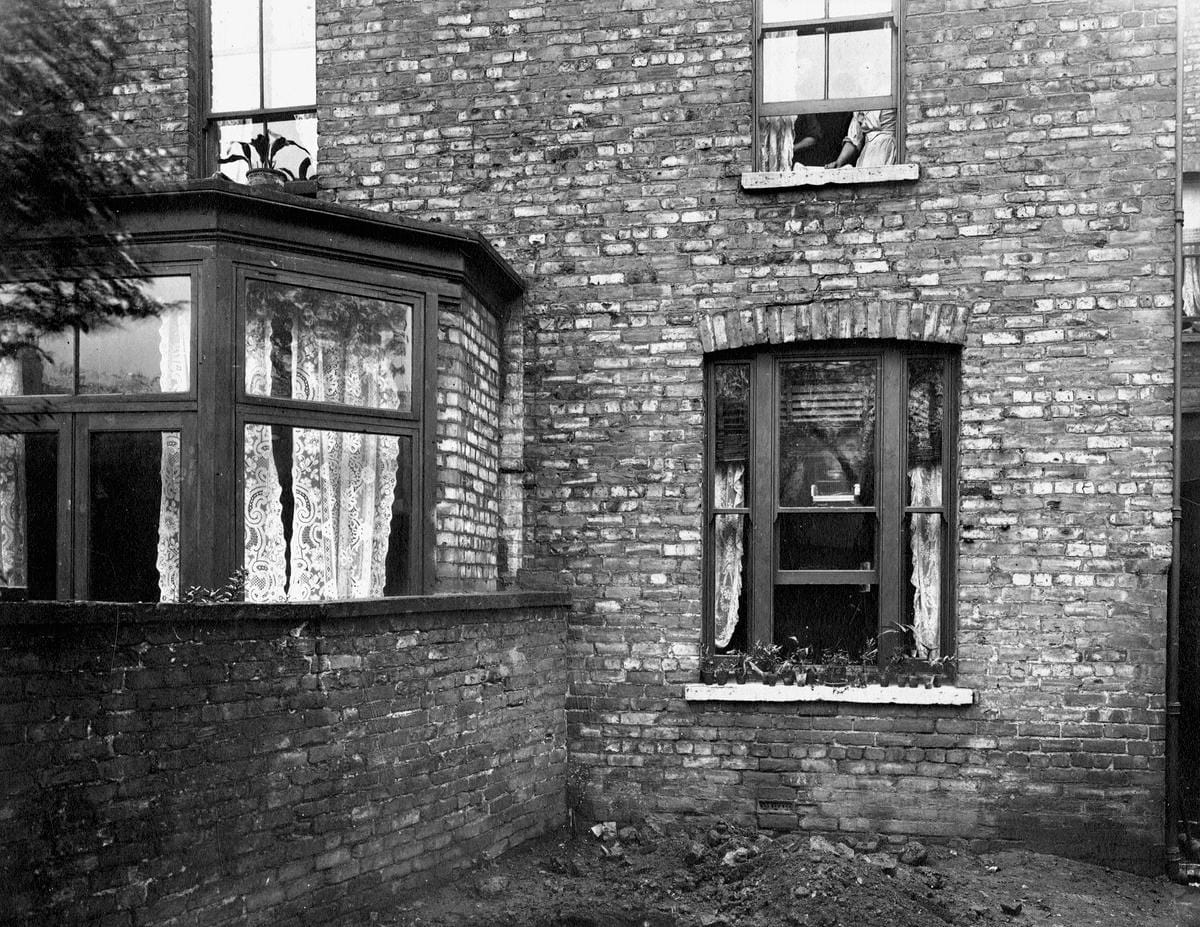
They’re genuine members, past and present, of North Manchester’s Jewish and Muslim communities. Manchester has been a valued home to both groups for several generations, a place where people from different traditions and backgrounds have found ways to live together.
“What they’ve said in the mosque is to be peaceful to one another,” says Mohammed. “And to keep safe, because anything could happen now.”
If you want to support our work, please sign up as a paying Mill member today.
You will get access to our entire back catalogue of award-winning stories, and you will be supporting our mission to give this city proper local journalism, for just £89 a year, or £1.70 a week.
This story was published by The Mill: an award-winning email newsletter that sends you great stories, proper local journalism and peerless writing about life in Greater Manchester. 58,000 people have already joined our mailing list. Just hit that button below to join up for free.